Buying Guides
How to Choose a Shower Head Supplier: A Buying Guide for Brands and Importers
Author·AMIKYRN Team·
When sourcing shower heads, the order matters: pick the right supplier first, then choose how to work together (OEM or ODM), then prepare your inquiry documents. Get the order wrong and everything after it gets reworked. This guide follows that order — just walk through it step by step.
1. Choose the Supplier First: What to Look At
If the supplier is wrong, nothing else you negotiate matters. Check these six things:
1. Spray modes and materials
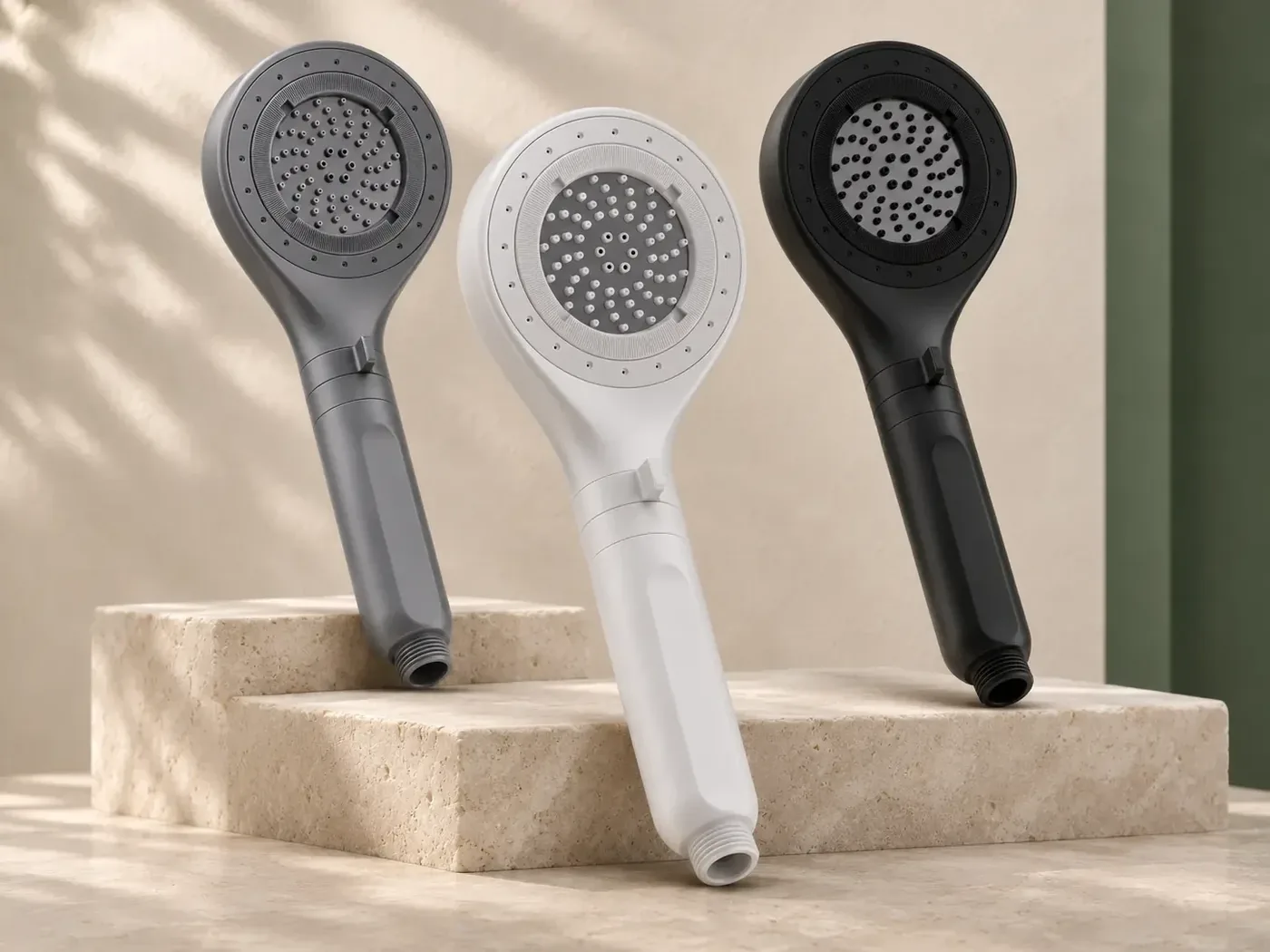
Ask the supplier to list the spray modes in writing. For example, AMIKYRN shower heads offer three modes: Nanobubble, Enhanced, and Pulse. Confirm the materials too — AMIKYRN uses an ABS handle with a stainless steel panel. For hotel and gym projects, confirm the materials can stand up to heavy daily use.
2. Water pressure and connections
Confirm the working pressure range before ordering. AMIKYRN shower heads work at 0.1–0.4 MPa (0.15 MPa recommended), with microbubbles averaging 185.4 nm (NTA-measured), under 1 μm — ultrafine bubbles (UFB). Connections are made to your target market's national standard. Most markets worldwide use G1/2; North America uses 1/2-inch NPT; current Japanese products also use G1/2, and K, M, and G adapters fit legacy KVK, MYM, and Gaster hoses. A wrong connection is one of the most common causes of B2B order returns.
3. Match the product to the setting
Water saving matters most for hotels and gyms, where shower heads run all day. AMIKYRN shower heads suit home bathrooms, hotel rooms, and gym shower rooms. When buying for hotels, ask specifically about water-saving performance and durability under frequent use — don't judge on retail price alone.
4. Get MOQ, certifications, and lead time in writing
Never place a bulk order on a verbal promise. Put the minimum order quantity, certification list, and lead time in the quotation or contract. AMIKYRN shower heads have an MOQ of 1,000 units, and the production lead time is 35–40 days after artwork approval. The shower head currently holds no certifications; required certifications are arranged per project and target market — confirm the certification plan in writing before ordering.
5. Is it their own factory?
Ask whether the supplier runs its own factory and can handle everything from mold making to quality inspection in-house. AMIKYRN's own factory in Xiamen covers mold making, injection molding, CNC machining, surface treatment, and quality inspection under one roof. The more steps are outsourced, the harder it is to trace a problem.
6. Confirm samples before bulk production
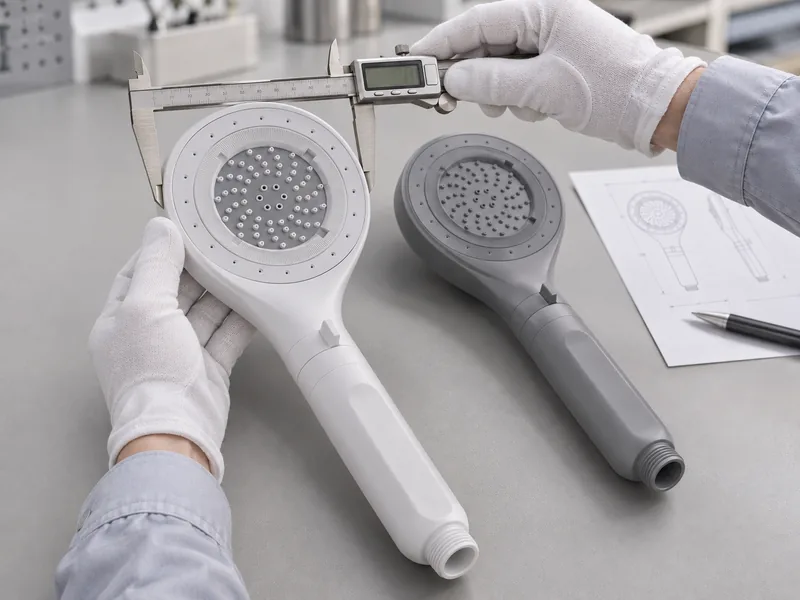
No matter how well you know a supplier, confirm samples before bulk production. For what to check item by item, see "Showerhead Sample Approval: What to Check, Item by Item".
2. Then Choose How to Work Together: OEM or ODM?
Once the supplier is chosen, decide on the cooperation model. Each model needs different preparation, so settle the direction before preparing documents.
OEM: You have an existing product, and the factory manufactures it for you — no mold fee. Best for projects with a mature product where you want to switch factories or expand capacity.
ODM: The factory develops a brand-new product for you from scratch — requirements, design, prototyping, mold making, mold trials, and mass production, all included. From first contact to first shipment takes at least 1 year, usually around 1.5 years. It is high-risk and capital-intensive, and only fits products with confirmed sales channels and real volume potential.
A third option: existing-model customization. Pick one of the factory's existing models and change the colors, logo, packaging, or partial configuration. This is the fastest route — but note that it is not full ODM. Confirm with the supplier which model you are actually doing, and don't mix the two in one conversation.
Not sure which to pick? Use these two rules: if you have a finished product to manufacture, choose OEM; if you want to develop a new product and have channels that can move volume, choose ODM; if budget and time are tight and this is your first time, choose existing-model customization.
3. OEM Inquiry Checklist
If you have an existing product, prepare these:
- Existing product documents: physical samples, drawings, and spec sheets — note which one is the reference for verification.
- Dimensions and structure: shower head dimensions, handle length, and overall structural requirements.
- Spray modes: how many modes you need and the water-flow effect of each; reference videos or samples help.
- Performance requirements: pressure range, flow rate, microbubble particle size, and other key metrics.
- Material requirements: panel and handle materials, surface treatment; confirm what the target market requires — standards differ by country.
- Connections: tell us your target market and the connection is made to its local national standard (G1/2 in most markets worldwide, 1/2-inch NPT in North America, K, M, and G adapters for legacy Japanese hoses).
- Certification requirements: mandatory certifications and test standards for the target market — state them upfront so the factory can confirm whether it can support them.
- Colors and logo: color codes/standards and logo files — finalize before sampling, or samples will need rework.
- Branding and packaging: logo placement, box type, whether an inner tray is needed, instruction manual.
- Quantity and timeline: estimated first-order quantity, replenishment plan, desired sample approval date, and launch date.
4. ODM Inquiry Checklist
For developing a new product from scratch, prepare these:
- Requirements summary: summarize your requirements first — spray modes, filtration options, extra features — then talk design.
- Target market and channels: where it will sell — retail, e-commerce, distribution, or project contracts. Different channels have different design and documentation requirements.
- Target-country requirements: regulations, standards, certifications, and labeling for the destination country — these differ everywhere. Confirm them at the inquiry stage, not when mass production starts.
- Size framework: provide a size framework early in design for the designers to work from, so the structure can't fail to fit. Shower heads are typically 250–270 mm long overall, with a mainstream panel diameter of 100 mm.
- Spray modes and performance: how many modes, the water-flow effect of each, pressure range, and microbubble particle size.
- Material requirements: what the target market requires of materials — standards differ by country.
- Connections: tell us your target market and the connection is made to its local national standard (G1/2 in most markets worldwide, 1/2-inch NPT in North America, K, M, and G adapters for legacy Japanese hoses).
- Colors and logo: color codes/standards and logo files — finalize before sampling.
- Branding and packaging: logo placement, box type, whether an inner tray is needed, instruction manual.
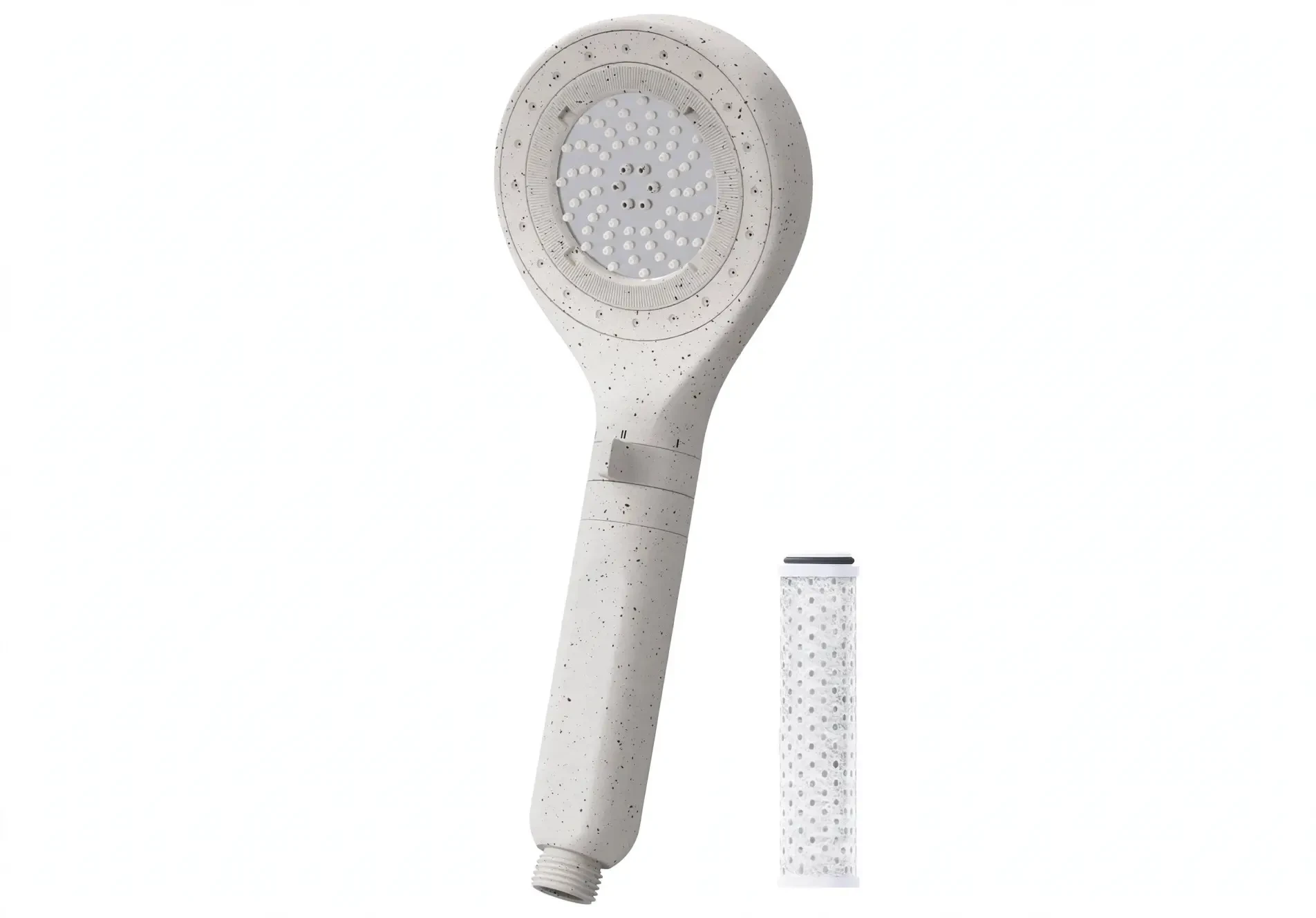
- Filtration: if filtration or dechlorination is needed, confirm separately whether the model supports it.
- Quantity, channels, and timeline: estimated first-order quantity, volume potential, and launch date. The full ODM cycle takes at least 1 year, usually around 1.5 years — leave enough time.
- Four pre-mold documents: confirm with the supplier that it will provide a mold quotation, a product quotation, a finished-product inspection standard, and a reliability test list before mold making. These four are prerequisites for mold making — don't start molds with any of them missing.

6. Copy-Ready Inquiry Brief Template
Replace the bracketed parts with your project details and send it to the factory:
Project: Shower head (OEM / ODM / existing-model customization)
Target market: (country), Channel: (retail / e-commerce / distribution / project)
Reference model / design: (model number, or attach drawings/samples)
Spray modes: (Nanobubble / Enhanced / Pulse)
Connection: (target-market connection standard)
Water pressure: (target-market pressure range)
Material requirements: (requirements)
Colors and logo: (color codes/standards, attach logo files)
Branding and packaging: (requirements)
Split quotation: (quote body / head / filter separately)
First-order quantity: (estimated quantity), Launch date: (date)
Certification requirements: (target-market certifications)
To be confirmed: (undecided items)
Frequently asked questions
- Can I inquire before all specifications are finalized?
- Yes. Send what is decided and mark the rest as to be confirmed. But try to settle spray modes, connections, and quantity first — otherwise quotations can't be compared.
- Is there a standard MOQ for all shower head projects?
- The shower head MOQ is 1,000 units. Share your estimated first-order quantity and the factory will confirm per project.
- How long is the bulk production lead time?
- 35–40 days after artwork approval. That is the bulk production lead time, not the full ODM cycle. ODM takes at least 1 year from first contact to first shipment, usually around 1.5 years — include your desired launch date in the inquiry so the factory can confirm scheduling per project.
- What do OEM and ODM each require me to prepare?
- For OEM, follow the Section 3 checklist — the core is existing product documents and performance specs. For ODM, follow the Section 4 checklist — the core is the requirements summary, target-country requirements, and the size framework. For existing-model customization, prepare the reference model and the changes you want, following the ODM checklist.
- Are they suitable for hotels and gyms?
- Yes. They suit home bathrooms, hotel rooms, and gym shower rooms. For hotel purchasing, ask specifically about water-saving performance and durability under frequent use.
- What certifications do they have?
- The shower head currently holds no certifications. Required certifications are arranged per project and target market — ask the supplier to confirm the certification plan in writing before ordering.
- What connection sizes are available?
- Connections are made to your target market's national standard — G1/2 in most markets worldwide, 1/2-inch NPT in North America, G1/2 on current Japanese products, with K, M, and G adapters for legacy KVK, MYM, and Gaster hoses.
Start your showerhead project with a clear brief
Send AMIKYRN your target market, use scenario and expected quantity. We will confirm specifications, how certification will be arranged and the sampling plan with the factory, and list what still needs your confirmation before quoting.
Start your showerhead project